"AI Is Very Powerful, But It Gets a Lot Wrong": Our Team Presents Trustbrief on COPE, the Tool Against AI-Generated Fake News
Malen Aguirre, Mencía González-Haba and Luis Bravo joined 'Lo que viene', the COPE radio show with José Ángel Cuadrado, to explain how Trustbrief works — the anti-disinformation solution born from the Spanish Government's hackathon that took them to represent our country at the UN. Watch the interview here.

Madrid. Artificial intelligence carries an uncomfortable paradox — the same technology that multiplies access to knowledge also amplifies hoaxes. And nobody explained it better than our own team on 'Lo que viene', the COPE radio show with José Ángel Cuadrado, where Malen Aguirre, Mencía González-Haba and Luis Bravo presented Trustbrief, the tool they've built to verify the reliability of information. As the headline chosen by COPE itself sums it up: "AI is very powerful, it's very good, but it gets a lot wrong."
You can also listen to the original audio on the COPE website (in Spanish).
From the Spanish Government's hackathon to the UN
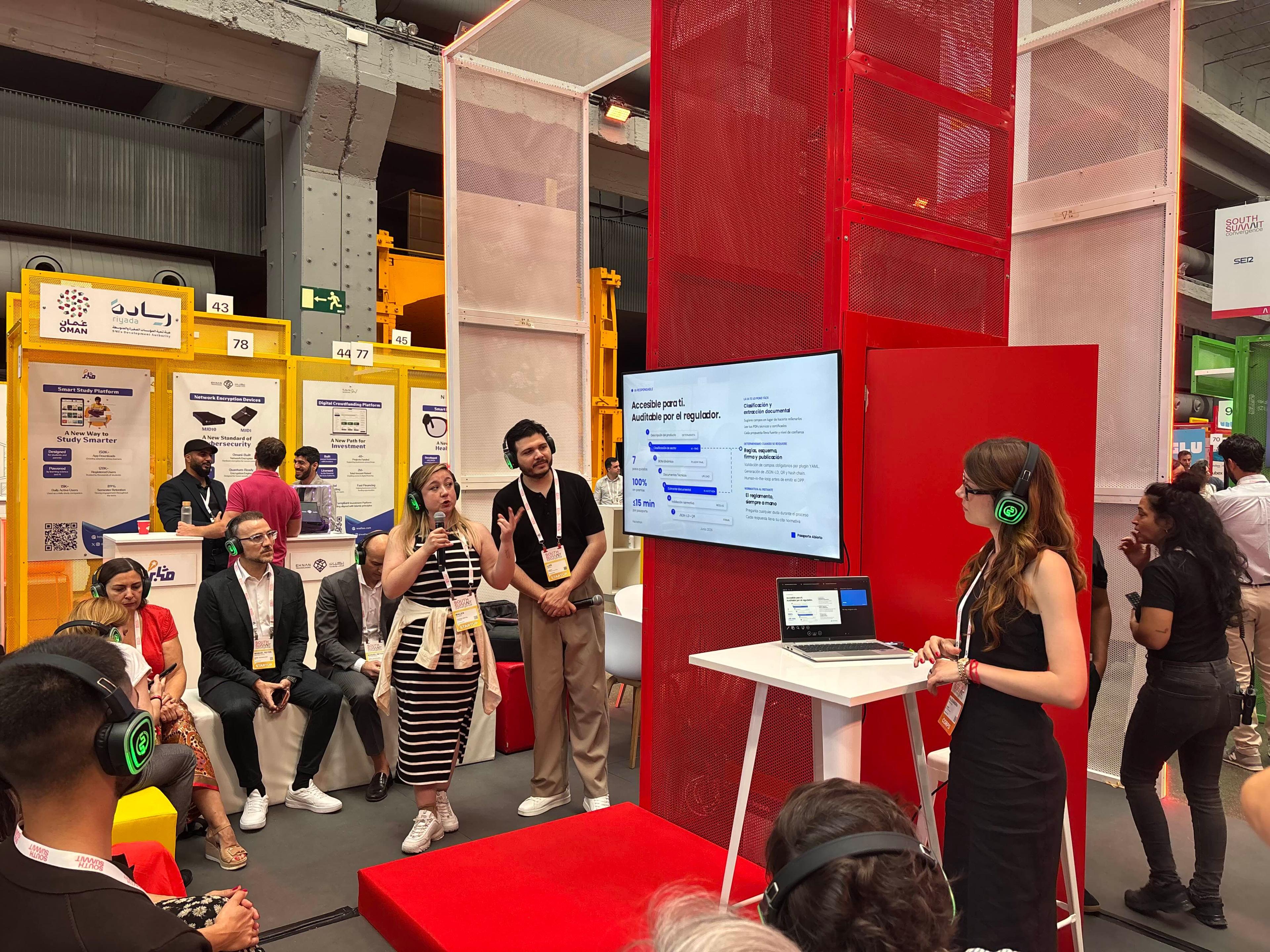
Trustbrief wasn't born in an office. As Mencía explained on air, the idea emerged after winning first prize at the hackathon organised by the Spanish Government, through SEDIA, in Zaragoza — the 'Responsible and Open AI in Industry Challenge'. That prize took the team to represent Spain at the United Nations headquarters in New York, during Open Source Week, where the project kept growing within UNICEF's 'From Data to Action' challenge.
An AI built so it cannot hallucinate
The key to Trustbrief lies in something that sounds simple and isn't. Before validating an answer, it verifies that the article or the source actually match — essential at a time when, as they said on the show, "many students and many people are learning from AI". Malen explained that the system is built "so it cannot hallucinate": it doesn't generate unsupported claims, but relies on verified sources from UNICEF, a European database and a UN database that will be available in September.
It's the same philosophy we apply to everything we build at Logixs — the power of AI is only worth something when it comes with traceability, sources and oversight. We said it when we analysed the risks of AI-generated code, and we'll say it again here: the problem isn't artificial intelligence, it's using it without verification mechanisms.

Young, and at war with disinformation
There's something else in this story that fills us with pride. Malen, Mencía and Luis are proof of the young talent we've been investing in for years — two GenAI developers aged 26 and 21, and our Head of Information Security, sitting in a national radio studio explaining how to tame AI so it tells the truth. The same team that won a national hackathon, represented Spain at the UN, and has now declared war on fake news.
Hit play and hear them tell it themselves. And if you'd like to explore what AI with verification and judgement can do for your organisation, let's talk.
Key takeaways
A tool created by the Logixs team that verifies the reliability of information before validating any answer, drawing on verified sources from UNICEF, a European database and a UN database.
The system is designed so it cannot hallucinate: it checks that the article or source actually match before validating any claim, instead of generating unsupported answers.
From first prize at the Responsible AI hackathon organised by the Spanish Government (SEDIA) in Zaragoza, which took its creators to represent Spain at the UN headquarters in New York.