"The AI lies that cost millions": our CEO takes the hype apart in a must-listen podcast
Francisco Moreno, CEO and founder of Logixs, gives an unfiltered account of how a real AI company gets built: why marrying a single model is a mistake, how ADA gets 90–95% of tasks done with no human intervention, and what competing looks like when the windows of opportunity last six months. Hit play.

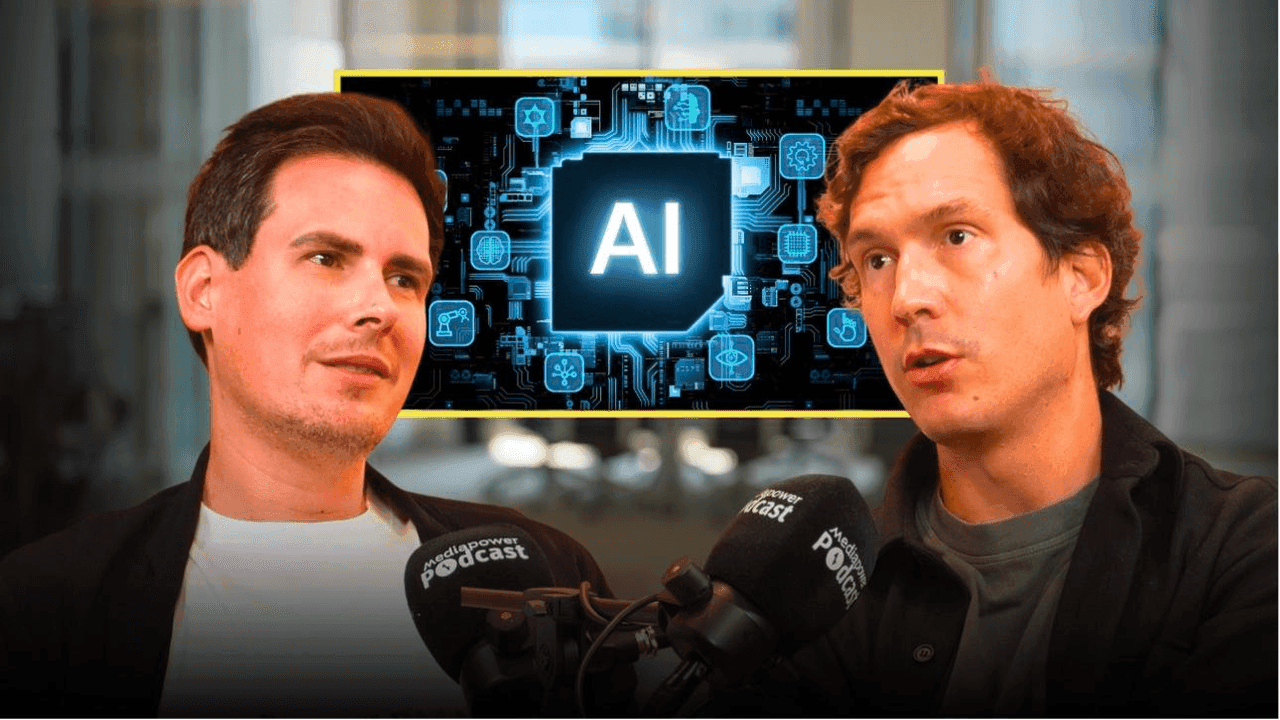
Madrid. Are we living through a genuine revolution in artificial intelligence, or a well-told narrative bubble? That is the question that opens the podcast featuring our CEO and founder, Francisco Moreno. Almost an hour of conversation, with no smokescreens, about what is really happening inside the companies that are actually building with AI.
The scaling problem: "Five people per million euros"
Logixs is around 80 people today, on track to close the year at €8 million and to reach €20 million in 2027. But as Francisco explains in the episode, the challenge is not growing headcount — it is growing efficiency: "My obsession has always been economies of scale. How can we do the same with half the people? Five people per million euros billed, and four the year after." The answer lies in the agentic systems we have built for the entire definition and development cycle.
ADA, or why vibe coding doesn't work for a multinational
Much of the conversation revolves around ADA, our flagship product. Unlike vibe coding tools such as Lovable or Cursor, which need a person steering them and "reach a point where they collapse", ADA works unattended: it understands the company's business — its real know-how, not ChatGPT's generic version — helps define what a new product involves, runs the challenge, the audit and the compliance work, generates the tasks in Jira, and spins up more than 50 types of implementation, testing and design agents.
The key piece is our consensus system: when the agents finish a task, "a panel of judges convenes" to score it and iterate on it until it clears the quality threshold. The result, in Francisco's words: "Between 90 and 95% of tasks need no human intervention. They come out perfect — all that's left is to hit publish."
Don't marry an AI model
One of the most quotable moments of the episode: "Three months ago almost nobody was using Claude, and now everyone says it's the best. When everything changes every month, marrying one company is lethal, it's criminal." That is why ADA is LLM-agnostic: for each task it uses whichever AI performs best at that moment, and it pits them against each other to audit itself. And there is another distinction that sets us apart: "Our tool is European. It is built on European ISO standards, European security frameworks and European regulation" — unlike alternatives that "all come from the other continent".
Speed, talent and six-month windows
The episode also gets into how you lead a company growing at this pace: an advisory board with profiles such as the former CEO of Banco Santander and the former CEO of SAS ("people like this stop you wasting time: every step you take is worth five or six"), a talent policy built on career paths rather than salary wars, and a culture of urgency that Francisco sums up in two lines that have stayed with him: "If you have your product and you don't share it, you're dead" and "companies are a matter of speed and impact; windows of opportunity last six months."
There is even time for a live demo: the voice agents in our agentic contact centre — running on our own voice model — calling repair shops to update the status of repairs, with a naturalness that makes them hard to tell from a person.
Hit play
Entrepreneurship, failure and second chances, hyperscaling, funding rounds and valuations, and a great deal of AI genuinely put to work. Listen to the full episode here and, if you want to see what this could do in your company, let's talk.
Key takeaways
Because the leader changes every few months. As the CEO of Logixs puts it, "marrying one company is lethal": ADA uses the best model for each task and pits them against each other to validate itself.
Between 90 and 95%, thanks to a consensus system in which "judge" agents score and iterate on every delivery until it clears the quality threshold.
Those tools work attended — they need a person steering them — and they collapse on complex projects. ADA operates unattended, contextualised with each company's own know-how, and built for enterprise environments with compliance and auditability.