PHP2Shell: The Lock on 7 Out of 10 Websites Had Been Open for Over a Decade and an AI Found It
Two critical flaws in PHP, the technology behind most of the world’s websites, WordPress included, allowed access to a server without a password. They stayed hidden from human eyes for over ten years and an AI found them in weeks. What happened, what it says about the new cybersecurity playing field and what you should check today.

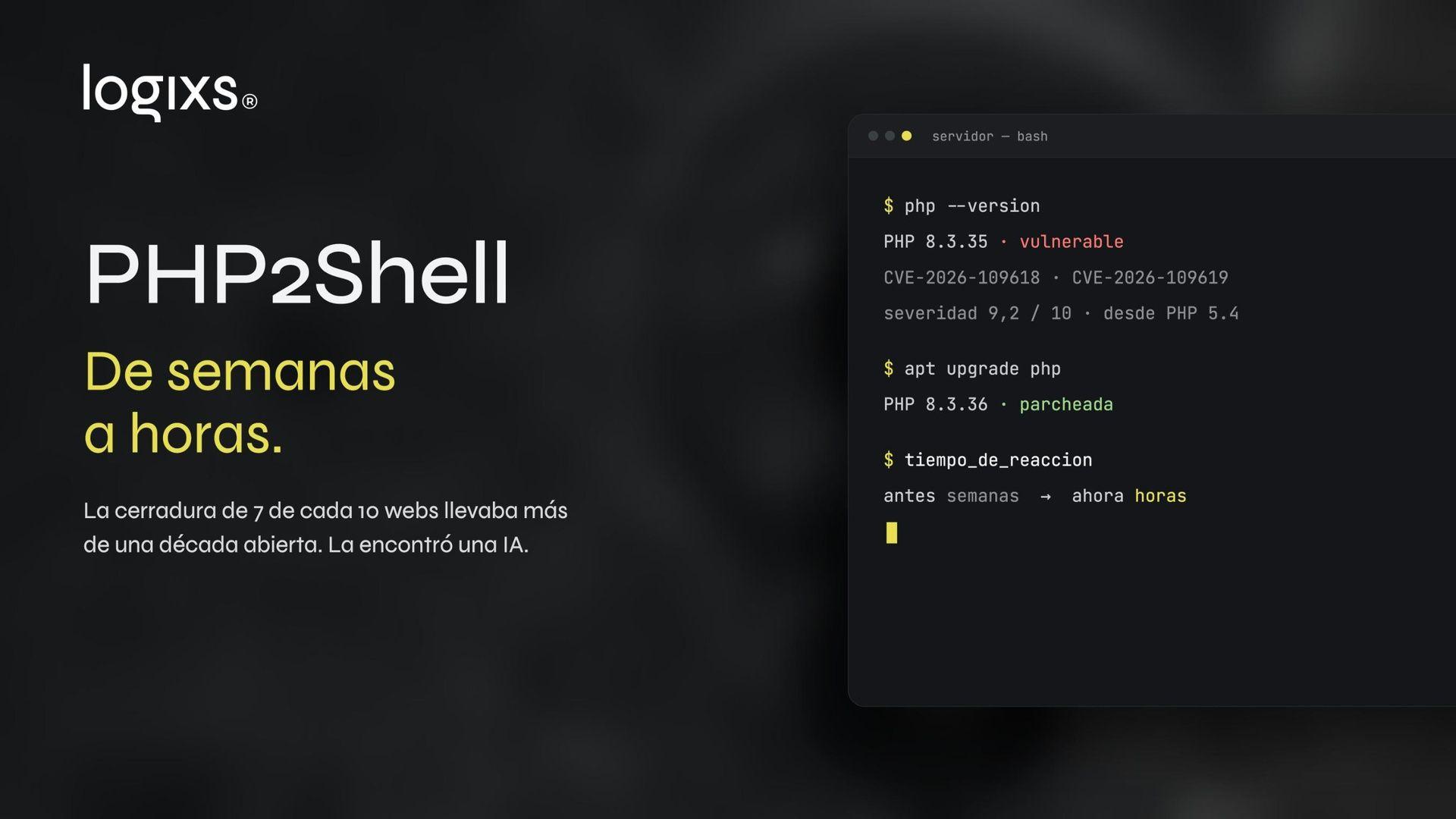
Madrid. Imagine the lock on almost 7 out of 10 websites in the world had a flaw. That it had been there for over ten years and nobody had managed to pick it. And that this summer someone finally did, with the help of artificial intelligence.
This is not a hypothesis. It is called PHP2Shell, the name given to two critical vulnerabilities in the PHP core (CVE-2026-109618 and CVE-2026-109619) that have put half the internet on alert this week.
What happened
PHP is the technology behind many of the websites you visit every day, WordPress included. The two flaws, rated 9.2 out of 10 in severity (CVSS), allowed an attacker to run code on a server remotely, without a password and with very little effort. They affected versions going back to PHP 5.4, more than a decade of vulnerable code in plain sight.
After the discovery, a group of experts worked in secret for two months to fix it before anyone else found it. They did not quite make it in time. Amazon detected an attack attempt four days before the flaw went public, and since 21 October, the day PHP released the patches (versions 8.5.12, 8.4.27, 8.3.36 and 8.2.35), active exploitation has already been observed.

The part that catches our attention most
It is not the flaw itself. It is who found it and how long it took. AI finds in weeks what had stayed hidden for over ten years despite decades of human review.
That helps defenders, but it helps attackers too. And it changes the variable that matters most in cybersecurity, time. The window to react is no longer measured in weeks but in hours.
It is exactly what we have been warning about since we analysed the impact of Claude Mythos, the model capable of uncovering vulnerabilities hidden for 27 years, and what Luis Bravo discussed on The Officer about AI and regulation. When artificial intelligence finds holes faster than organisations can patch them, security stops being a department and becomes a race. PHP2Shell is not an isolated case, it is the confirmation of a pattern.
What you should do today
If you have a website, today is a good day to ask whoever manages it a one-minute question. Does it run on PHP and is it already updated? The only complete fix is updating to the patched versions (8.2.35, 8.3.36, 8.4.27 or 8.5.12).
If your site runs on an old branch without official support, PHP 8.1 or earlier, vendor patches with extended support exist, but now is the time to plan the migration.
And if you manage technology at a larger scale, the lesson runs deeper. An up-to-date version inventory, the ability to patch in hours and continuous code validation, including AI-generated code, which as we have reported contains vulnerabilities in around 45% of cases. It is the philosophy behind ADA, where every delivery is automatically validated against security criteria before reaching production.
The era when a flaw could sleep in the code for ten years is over. The question is whether your organisation finds out from the patch or from the attack. If you prefer the former, let’s talk.
Key takeaways
The joint name for two critical vulnerabilities in the PHP core (CVE-2026-109618 and CVE-2026-109619, severity 9.2) that allow unauthenticated remote code execution on a server. They were discovered with the help of AI after staying hidden for over a decade.
Versions from PHP 5.4 onwards are affected. The patched versions, released on October 21, 2026, are 8.2.35, 8.3.36, 8.4.27 and 8.5.12. Updating is the only complete remediation.
Ask whoever manages it whether it runs on PHP (WordPress, Drupal and Joomla do) and whether it’s on a patched version. Active exploitation has been observed since October 21.
That cybersecurity’s clock has changed: AI locates in weeks the flaws human review missed for years, benefiting defenders and attackers alike — the reaction window is now measured in hours.